

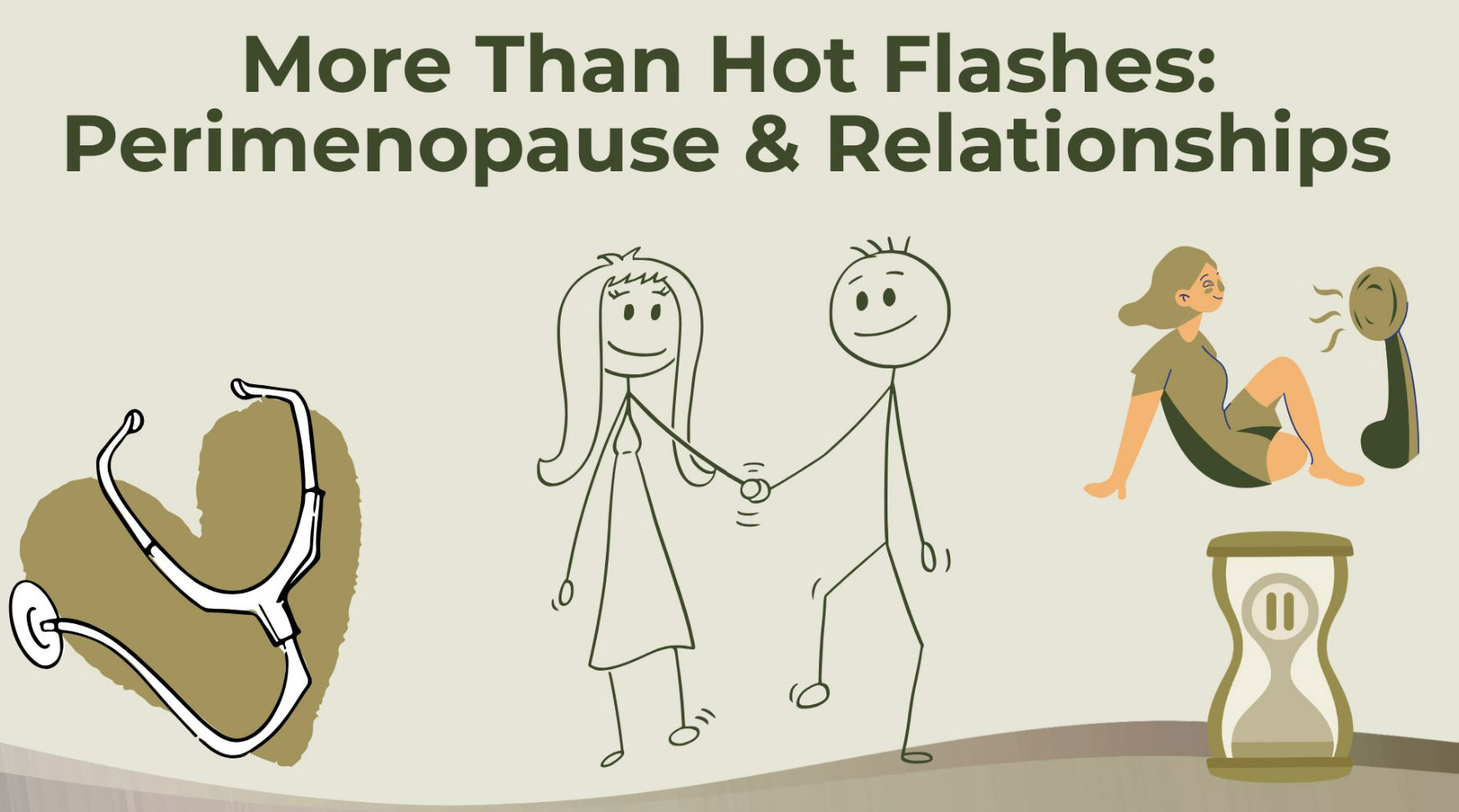
Perimenopause is the natural transition leading up to menopause, when hormone levels begin to fluctuate and menstrual cycles may become less predictable. It typically begins in a woman’s 40s, although it can start earlier, and may last several years. These hormonal changes can bring a range of physical and emotional symptoms before menopause is reached.
Perimenopause can arrive quietly, but changes can feel anything but subtle. Shifting hormones can affect:
Sometimes these leave women wondering, “Why don’t I feel like myself anymore?” and quietly begins to affect their closest relationships.
What makes this transition even more difficult is how easily these experiences can be misunderstood or even minimized. Irritability may be dismissed as being “moody”, exhaustion as simply being everyday stress, and changes in intimacy may be taken personally by a partner.
Meanwhile, a woman may be trying to make sense of changes in her own body and emotions that she never expected.
As a partner, these changes may feel like emotional distance or rejection but they have little to do with the relationship itself. Having a partner who understands what is happening can make a meaningful difference. Patience, reassurance, open conversations, and simply being there can help make this transition feel less isolating and bring couples closer through the changes.

Listen Without Judgement: Sometimes being heard and understood is more helpful than immediately offering solutions, especially when your partner may already be everything they can to feel better.
Offer a cold drink or cool compress when needed.
Keep the bedroom cool and consider adding a fan to your partner’s side of the bed.
Take on more household tasks like meal planning, errands, or other responsibilities when your partner is feeling overwhelmed or exhausted.
Go for walks, exercise together, prepare nutritious meals, or create relaxing routines you can both enjoy.
Changes in sexual desire or affection may occur during perimenopause and should not automatically be interpreted as rejection.
A simple “How can I support you right now?” can go a long way.
If your partner is comfortable with it, accompanying them can provide emotional support and help them feel less alone when discussing symptoms and treatment options.
Your partner may be experiencing the symptoms, but they should not have to navigate the changes alone. Patience, reassurance, open communication and small acts of care can remind them that you are beside them through every stage! It will also allow you to learn about perimenopause together.

Being patient, listening without immediately trying to fix the problem, and learning about perimenopause can help your partner feel understood and supported. Perimenopause brings enough changes on its own, feeling alone in your relationship should not have to be one of them!
Stuck in an emotional rut and need help to get out? Call now and book an appointment with one of our therapists.
📞 Call us at: (403) 619-5354
📧 Email: hello@journeycounselling.ca
🌐 Book online: journeycounselling.ca